HomeWhat Should You Know Before Investing in an NFO?
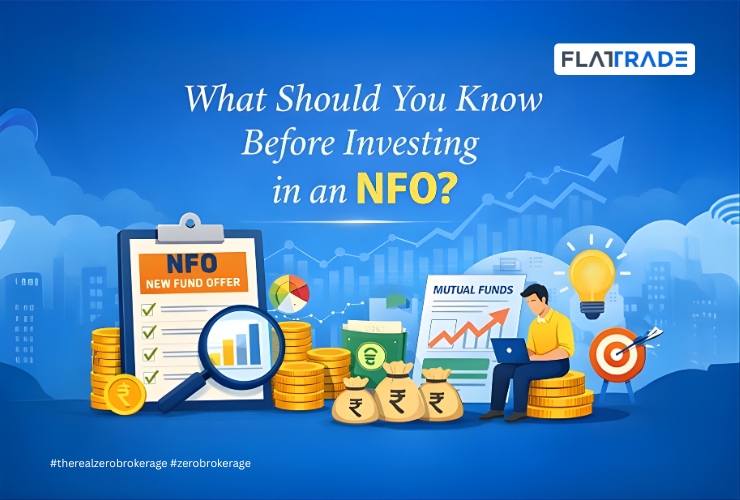
An NFO, or New Fund Offer, is the launch of a new mutual fund scheme by an Asset Management Company (AMC) to raise money from investors. During the NFO period, investors can subscribe to the fund at an initial offer price, usually ₹10 per unit. The subscription window is limited, typically open for a few days to a couple of weeks.
After the NFO closes, the fund begins investing according to its stated objective, and the Net Asset Value (NAV) starts moving based on market performance.
For example, if an AMC launches an AI-themed equity NFO, it may invest in companies linked to artificial intelligence and related technologies – giving investors exposure to a theme that may not be covered by their existing funds.
Important to note: A ₹10 NFO price does not mean the fund is “cheap.” It is simply a starting NAV – not a valuation signal.
Types of NFOs
Open-ended funds
These continue to allow purchases and redemptions even after the NFO period. Investors transact directly with the fund house at the prevailing NAV.
Close-ended funds
These issues are fixed in a fixed number of units during the NFO period and are later listed on exchanges. They typically have a defined maturity period, usually ranging from 3 to 5 years. Liquidity depends on exchange trading.
Interval funds
These combine the features of open and close-ended funds. Buying and redemption are allowed only during specific pre-announced intervals.
Why Investors Consider NFOs?
Strategy or theme access
NFOs sometimes introduce new strategies, sectors, or themes not available in existing schemes.
Portfolio diversification
They may help investors add exposure to a new category or asset mix.
Structured mandate
New funds often come with clearly defined mandates and allocation frameworks from day one.
What to Evaluate Before Investing in an NFO?
Fund house and manager track record
Since the fund itself has no performance history, review the AMC’s track record and the fund manager’s experience.
Fund objective and strategy
Read the Scheme Information Document (SID). Check asset allocation, benchmark, risk level, and investment approach.
Expense ratio
Costs directly affect returns. Compare expected expense ratios with similar existing funds in the same category.
Risk profile
Sectoral and thematic NFOs can be more volatile. Make sure the fund’s risk level matches your comfort and goals.
Liquidity and lock-ins
Check lock-in periods, exit loads, and redemption rules, especially for close-ended or interval funds.
Existing alternatives
Always compare the NFO with established funds in the same category. A new fund is not automatically a better fund.
How to Invest in an NFO via Novo?
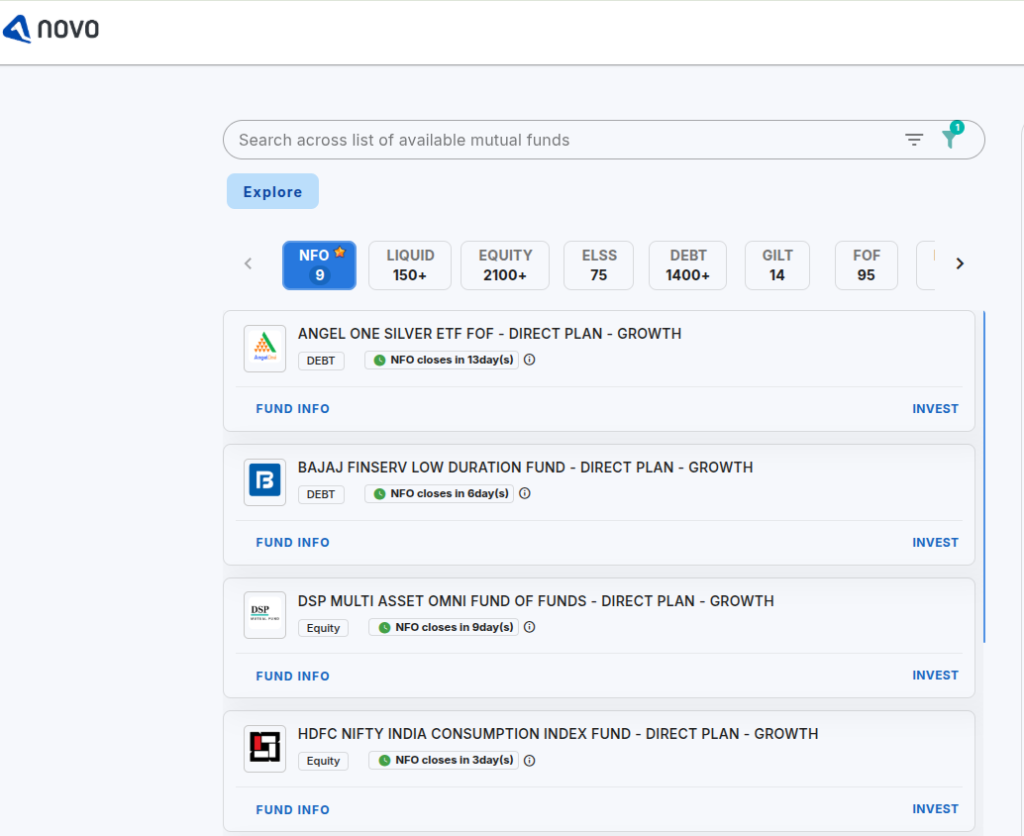
Log in to the Novo app or web platform
Use filters to view currently open NFOs
Select your preferred scheme
Invest via SIP or lump sum (if allowed by the scheme)
Important Notes for NFO Investors
NFO units cannot be redeemed until allotment is completed
NAV becomes active only after the fund deploys capital
Minimum investment amounts vary by scheme
Sectoral and thematic NFOs may carry a higher risk
Invest in Zero-commission Direct Mutual funds, IPO,Sovereign Gold bonds, Government bills, and Corporate bonds.
Previous Post
Wednesday Reminder: Time – The One Asset You Can’t Reinvest
February 11, 2026
2 min read
Next Post
Indian equity indices ended lower, snapping the four day gain; Except Consumer Durables, all sectors ended in red; Broader market indices also ended with losses