

Rahul didn’t come to the markets chasing thrills.
He came looking for growth.
Two years ago, he invested his first bonus. Fixed deposits felt safe, but also slow. He wanted to understand how money actually multiplied. How businesses grew. How wealth was built, not just parked.
The early days were kind to him.
He bought a few well-known companies. Prices inched up. His portfolio glowed green more often than red. He checked it between meetings, sometimes during meetings. Quietly pleased.
“This isn’t as complicated as people say,” he thought.
Then one morning, it changed.
Rahul opened his app – and froze.
Red. Everywhere.
Stocks down. Index down. Portfolio down.
“What is happening?” he said out loud.
Across the table, Anu looked up from her laptop. “First real fall?” she asked.
“It was fine yesterday!” Rahul said. “Nothing changed in one day. How can everything drop together?”
Anu smiled. “Something did change. Your market education.”
He shook his head. “This feels wrong.”
“It feels uncomfortable,” she said. “Not wrong. This is volatility.”
He leaned back. “Everyone says that word. What does it actually mean?”
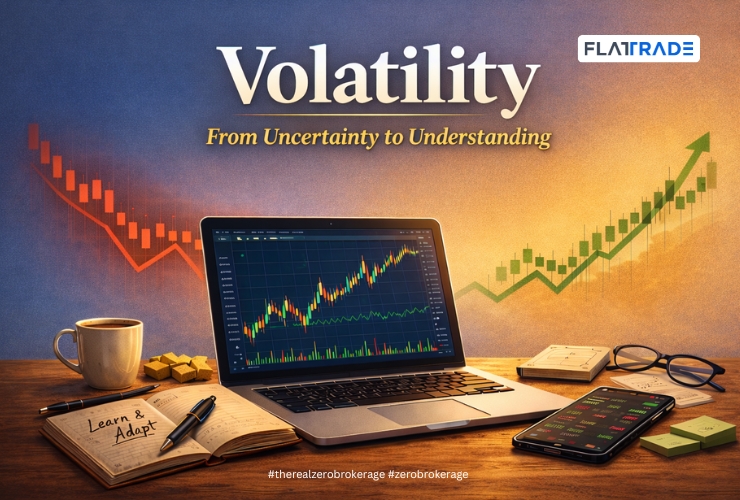
“It means the market is alive,” Anu said. “Prices move because expectations move. News moves. Fear and confidence move. Volatility is just motion – sometimes fast motion.”
“So it’s not a sign that something is broken?”
“Not by default,” she said. “It’s a sign that people are reacting.”
Rahul stared at his screen again. “Still feels risky.”
“It is,” she replied calmly. “Which is why structure matters more than prediction.”
He looked at her. “Structure?”
“Simple things,” she said, counting on her fingers.
“Don’t bet too big on one idea. Decide your exit before your entry. Diversify. Use data. Think in years, not days.”
He was quiet for a moment. “So experienced investors don’t panic?”
“They feel the same emotions,” she said. “They just don’t let emotions make the decision.”
The next few days were still choppy. Prices swung. Headlines screamed. Social media panicked. But Rahul did something different this time – he watched without rushing to act. He reviewed positions. Adjusted sizes. Set alerts instead of staring at the screen.
A week later, the market bounced.
Green returned.
Rahul checked his portfolio again – but this time, he didn’t feel the same rush.
“It’s rising fast now,” he said.
Anu nodded. “Volatility works both ways.”
“So last week wasn’t a disaster?”
“No,” she said. “It was training.”
That stayed with him.
He realized volatility wasn’t chaos. It was information. A signal of changing expectations. A test of preparation. A mirror of collective behavior.
Like waves in the ocean – frightening from far away, rhythmic once understood.
The market doesn’t promise comfort.
It offers opportunity – mostly to those who prepare for movement, not perfection.
And over time, Rahul stopped asking, “Why is it moving so much?”
He started asking, “Am I ready when it does?”
Volatility cannot be avoided – but confusion can be reduced. With the right tools, clean execution, and transparent zero brokerage structure, platforms like Flattrade help investors stay focused on decisions, not distractions.