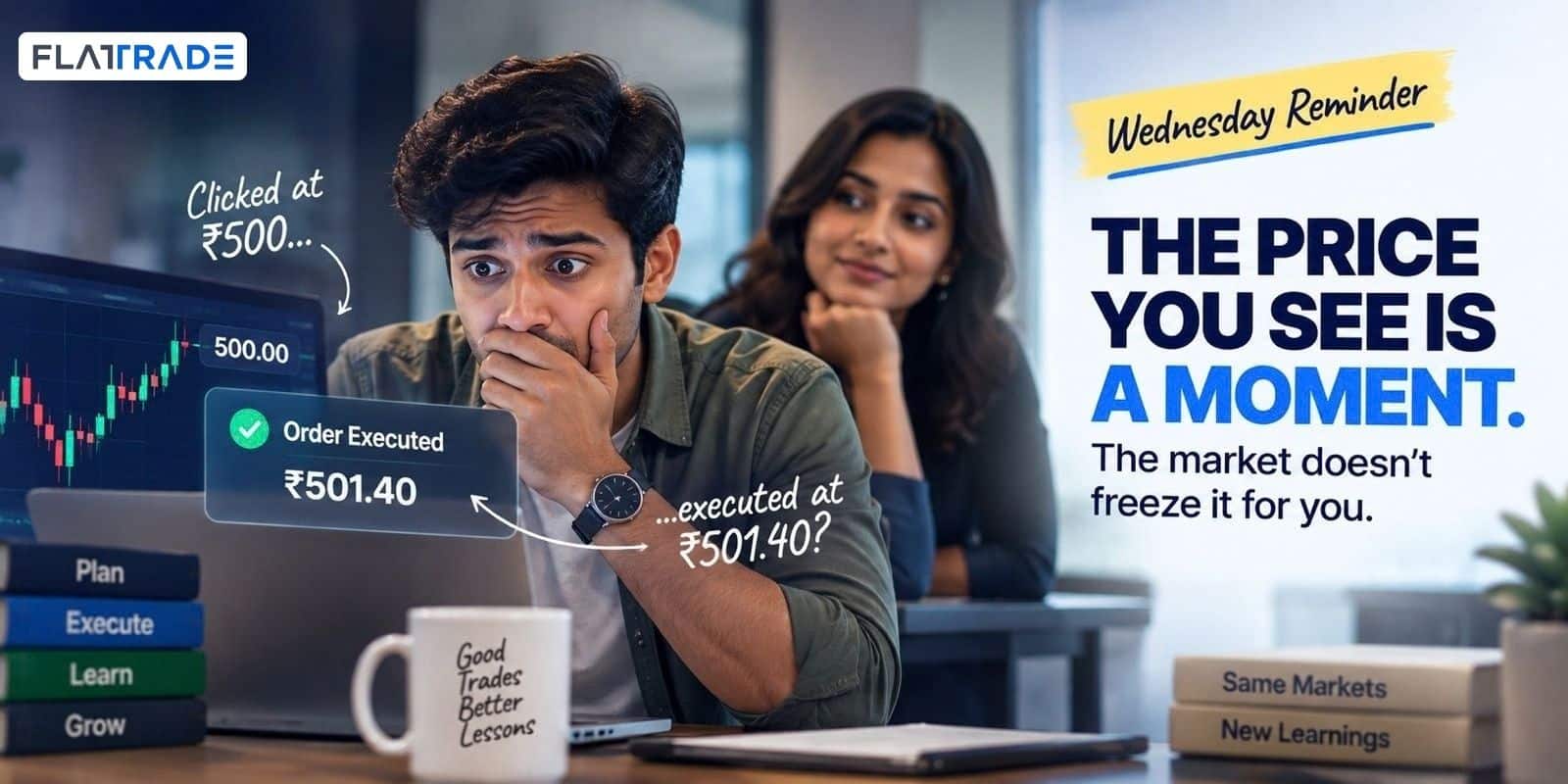



Meet Arjun.
28 years old. Working professional. Coffee beside his laptop. Office mail on one screen, market charts on the other.
Not a market guru.
Not someone posting P&L screenshots online.
Just someone like thousands of traders – trying to understand markets one day at a time.
His mornings had become a routine.
Wake up.
Check global cues.
Read headlines.
Open charts.
Mark support and resistance.
And remind himself:
“Today, I’ll trade only if everything aligns.”
He had learned this the hard way.
Because his early trading days looked very different.
Like many traders, Arjun once believed his biggest problem was lack of capital.
Whenever a stock moved sharply, one thought would hit him:
“If only I had more money…”
He watched stocks move 3%, 4%, sometimes even more intraday.
“What if I had taken a bigger position?”
“What if I had more buying power?”
“What if…”
Then markets taught him a lesson.
One day he entered a trade with complete confidence.
News looked positive. Charts looked perfect. Indicators aligned.
For the first few minutes, everything felt magical.
The stock moved in his favor.
Green numbers flashed.
Adrenaline kicked in.
That feeling traders know very well – when your mind quietly whispers:
“This is the one.”
Then suddenly, the market changed.
A large sell order entered.
The stock reversed.
Small red numbers appeared.
Then bigger ones.
Arjun stared at the screen.
The same market that looked friendly five minutes ago suddenly felt like an exam he hadn’t prepared for.
That day, he understood something traders rarely admit:
Markets don’t punish only wrong analysis.
Sometimes they punish overconfidence.
After that, Arjun changed.
He stopped chasing every candle.
Stopped reacting to social media noise.
Stopped believing every breakout was destiny.
He became patient.
A few weeks later, he started tracking another stock carefully. Every morning he watched it quietly, marked levels, and waited.
Days passed.
Then one Tuesday morning at 9:18 AM, the setup finally appeared.
Volume increased.
Resistance broke.
Momentum entered.
This was the trade he had been waiting for.
He opened his account.
Available funds: ₹20,000.
And for a moment, the old thought returned:
“I found the opportunity… but what if my capital limits me?”
Then he remembered something in his Flattrade account:
Up to 5X Leverage on Equity Intraday.
₹20,000 could become up to ₹1,00,000 intraday buying power.
For a second, excitement returned.
But unlike the old Arjun, he didn’t rush.
Because by now, he understood something important:
Leverage is not magic.
It’s a tool.
And tools depend on the person using them.
Used responsibly, leverage can increase opportunity.
Used emotionally, it can increase mistakes.
It can amplify gains.
It can amplify losses too.
That’s why experienced traders don’t ask:
“How big can I trade?”
They ask:
“How responsibly can I use this?”
This time, Arjun entered carefully.
Position size planned.
Risk decided before entry.
Exit strategy ready.
No emotional decisions.
No revenge trading.
No doubling quantity because confidence felt high.
Because traders eventually realize the hardest battle is rarely against the market.
It’s against:
Fear when prices fall.
Greed when profits rise.
Regret after exiting early.
FOMO after missing a move.
And that dangerous thought:
“One more trade…”
That day, Arjun realized something important.
The market is rarely won by people with the biggest capital.
Or the loudest opinions.
Or the most indicators.
It’s often won by people who stay disciplined when emotions become expensive.
Flattrade’s Up to 5X Equity Intraday Leverage gives traders more buying power and flexibility – but like every powerful market tool, it works best in the hands of traders who respect risk as much as opportunity.
Because in markets, the goal is not just finding opportunities.
It’s staying disciplined enough to survive the ones that don’t work out.