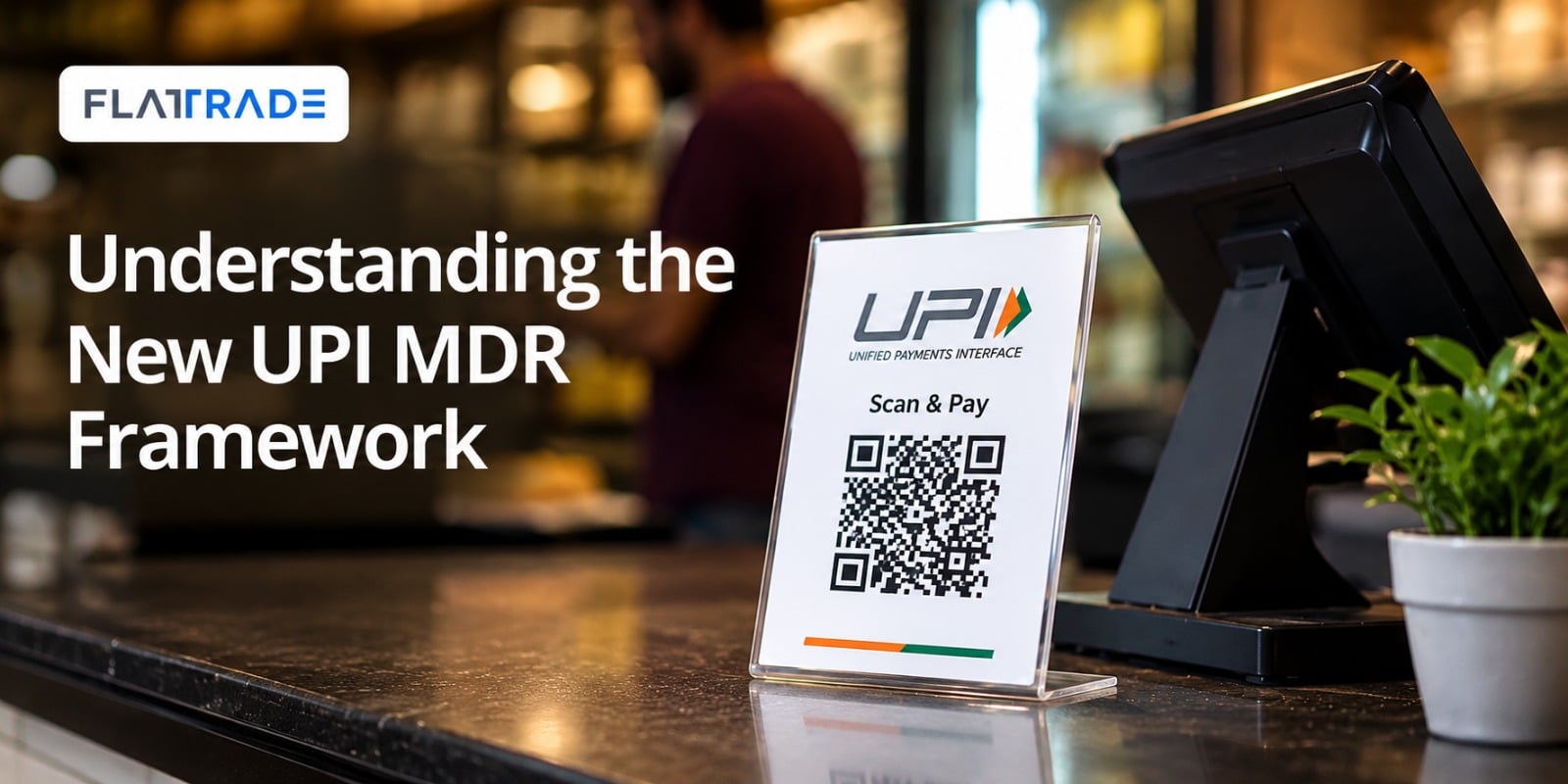

India’s Unified Payments Interface (UPI) has transformed the way millions of people make digital payments. From buying groceries and paying utility bills to investing in mutual funds, UPI has become the country’s preferred payment method.
To support the growing UPI ecosystem and ensure its long-term sustainability, a Merchant Discount Rate (MDR) framework has been introduced for select merchant transactions. The policy is designed to strengthen payment infrastructure while ensuring that UPI continues to remain free for consumers and affordable for merchants.
This article explains what UPI MDR is, why it has been introduced, who it applies to, and how it affects consumers and businesses.
What is Merchant Discount Rate (MDR)?
Merchant Discount Rate (MDR) is a fee paid by merchants to payment service providers for processing digital payment transactions. It is not a charge paid by customers.
The fee is distributed across various participants in the payment ecosystem, including acquiring banks, issuing banks, payment processors, and infrastructure providers, helping maintain secure and reliable digital payment services.
When Will the New MDR Rules Come Into Effect?
The updated MDR framework will become effective from 15 October 2026, providing sufficient time for banks, fintech companies, payment aggregators, and merchants to update their systems.
For standard Person-to-Merchant (P2M) UPI transactions:
Transaction Value | MDR |
Up to ₹2,000 | No MDR |
Above ₹2,000 | 0.4% |
₹75,000 and above | Maximum ₹300 per transaction |
This cap ensures that even very large transactions do not incur disproportionately high processing charges.
Does the Consumer Have to Pay Anything?
No.
One of the most important aspects of the policy is that UPI remains completely free for consumers.
Whether you’re:
- Shopping at a store
- Paying at a restaurant
- Sending money to family
- Paying rent
- Splitting bills
- Paying friends
there are no charges for customers.
Additionally:
- UPI apps cannot charge platform fees.
- Consumers continue paying only the listed price of goods and services.
Are Person-to-Person (P2P) Transactions Affected?
No.
UPI transfers between individuals remain completely free, regardless of the transaction amount.
Examples include:
- Sending money to friends
- Family transfers
- Self-account transfers
- Bill splitting
No MDR applies to these transactions.
What About Small Merchants?
Small merchants continue receiving significant protection under the policy.
Merchants classified under the P2PM (Person-to-Person Merchant) category remain exempt from MDR.
These are generally merchants receiving up to ₹1 lakh per month through UPI QR codes directly into their personal bank accounts.
Even if an individual payment exceeds ₹2,000, exemption depends on the merchant’s category rather than the transaction amount alone.
What is P2PM?
P2PM is a special merchant category created to encourage digital payments among:
- Street vendors
- Small retailers
- Local shops
- Informal businesses
- Home businesses
Benefits include:
- Zero MDR
- No QR code replacement
- Existing QR codes continue working
- Easier digital adoption
Special MDR for Certain Industries
Some sectors benefit from a flat-rate MDR instead of the standard 0.4%.
For transactions above ₹2,000:
- Railways
- Telecom
- Insurance
- Fuel
- Utilities
are charged a flat ₹5 per transaction.
This helps essential services avoid higher processing costs.
MDR for Capital Market Transactions
Capital market transactions receive a separate concessional rate.
Applicable to:
- Mutual Funds
- Stockbrokers
- Securities
- Investment Platforms
MDR:
- 0.02%
- Maximum cap of ₹300
This lower fee encourages greater retail participation in financial markets.