



PRE MARKET
Indian equity indices ended sharply lower on March 30, due to various reasons, including a rising rupee.
At close,
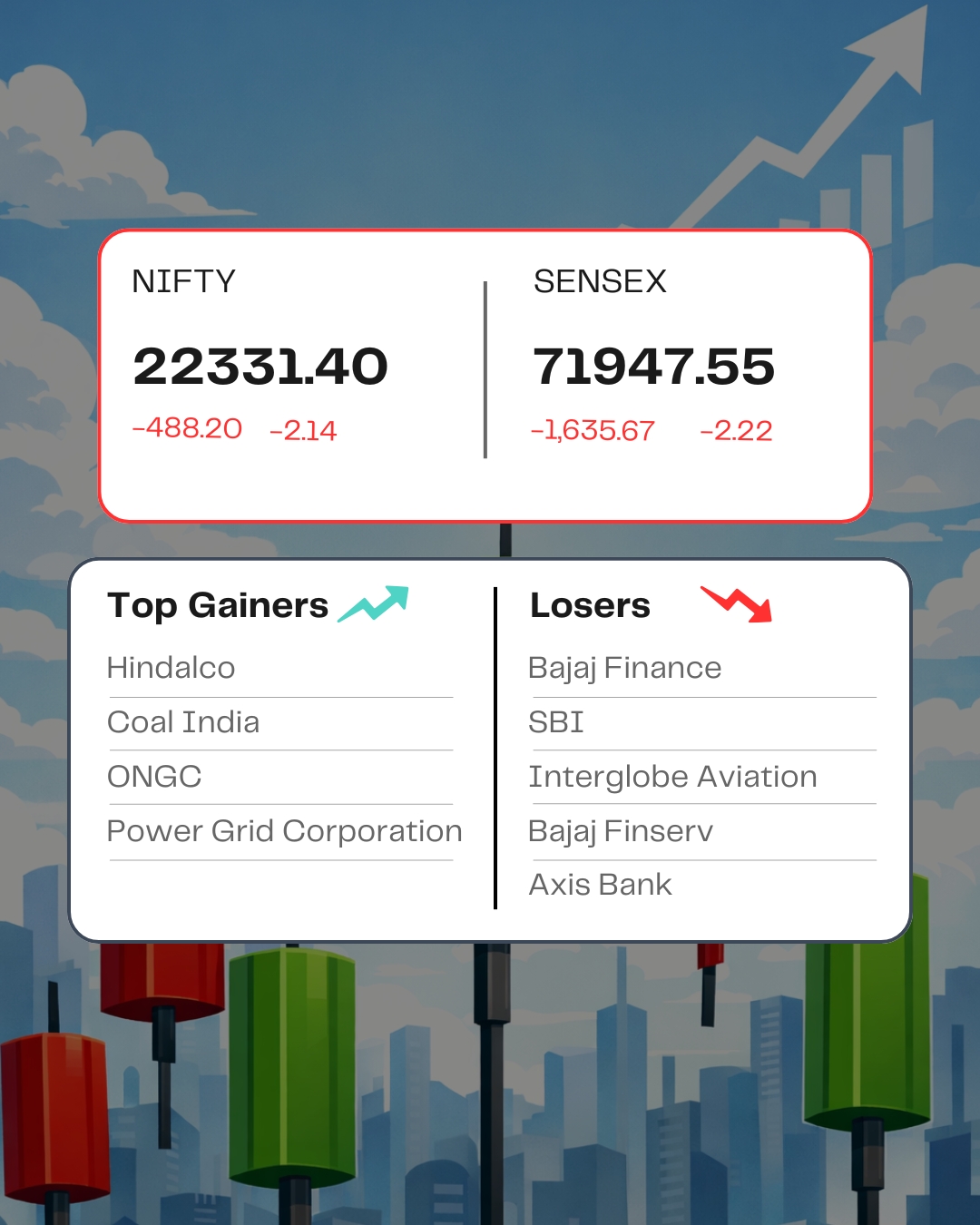
Sensex ↓ down 1,635.67 points or 2.22 percent at 71,947.55
Nifty ↓ down 488.20 points or 2.14 percent at 22,331.40.
About 837 shares advanced, 3419 shares declined, and 138 shares were unchanged.
Top losers – Bajaj Finance, Axis Bank, Shriram Finance, State Bank of India, and InterGlobe Aviation.
Top gainers – Hindalco Industries, Coal India, ONGC, and Power Grid Corporation of India.
All the sectors ended in the red with auto, FMCG, consumer durables, capital goods, telecom, realty, private bank, and PSU bank down 2-4%.
The broader markets also witnessed sharp declines, with the Nifty Midcap and Smallcap indices shedding around 2.6 percent each.
STOCKS IN NEWS
Jubilant FoodWorks
Shares of Jubiliant Foodworks, along with other restaurant-related stocks, declined on Monday amid concerns over LPG supply disruptions linked to the ongoing conflict in West Asia. Jubiliant Foodworks shares went down almost 4 percent.
NALCO
National Aluminium Company (NALCO) shares hiked 3.8 percent on March 30, after the metal’s prices jumped up to 6% to close in on four-year highs on Monday after the Middle East’s two largest producers sustained damage from Iranian attacks over the weekend.
Thermax
Thermax share price gained almost 2 percent on March 30 following the company’s wholly owned arm, Thermax Babcock & Wilcox Energy Solutions Limited (TBWES), which won an order worth RS 1,600 crore for an 800 MW ultra-supercritical thermal power plant.
Coal India
Coal India’s shares rose around 1.13 percent on March 30, 2026. The gain was driven by a surge in global energy prices, further intensified by geopolitical tensions in West Asia. The company’s subsidiary CMPDI is also listed on the stock market today.
Source – Moneycontrol