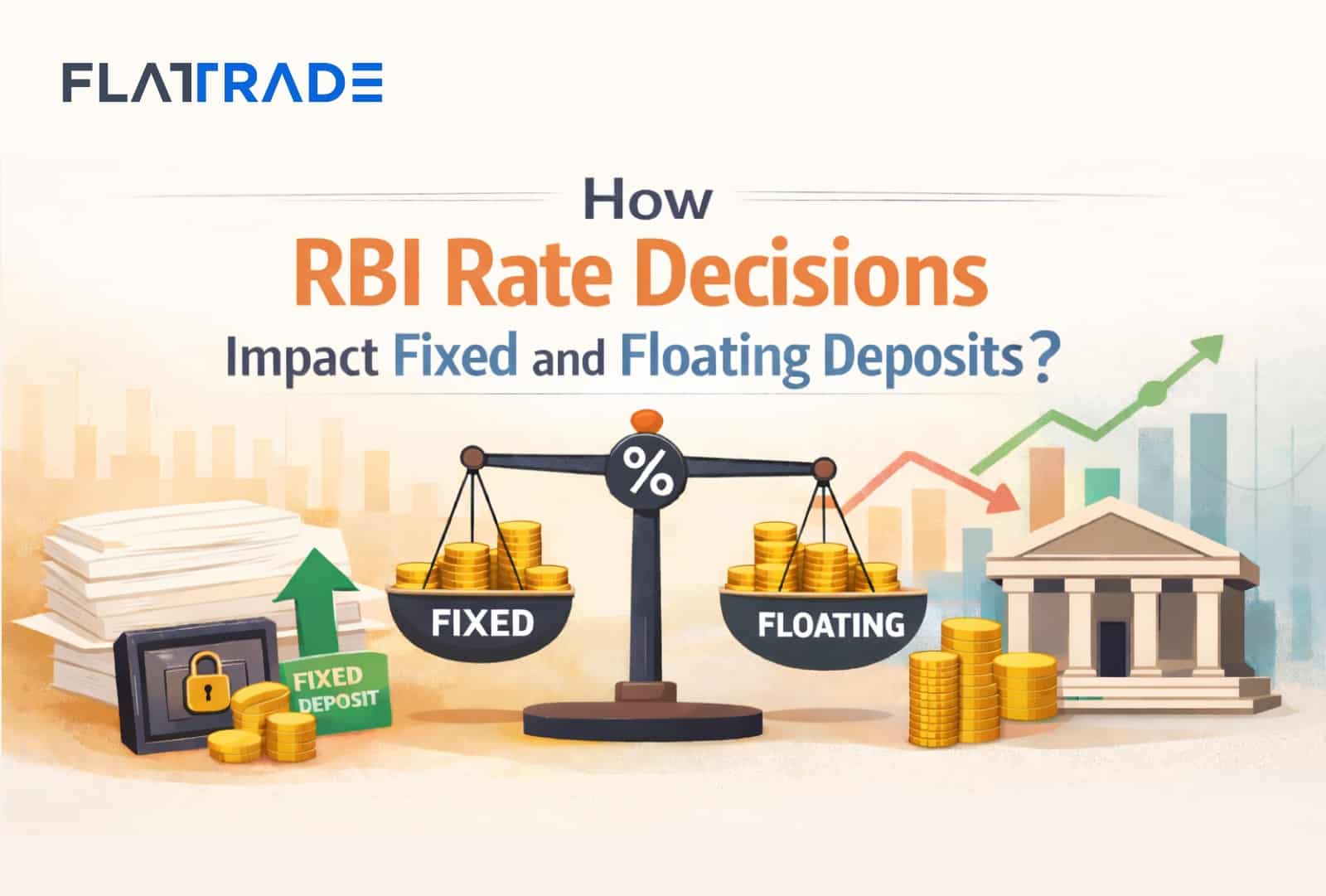
HomeHow RBI Rate Decisions Impact Fixed and Floating Deposits?
“When RBI changes rates, your returns change too.”
Interest rates play a key role in investment decisions, especially for fixed-income options like Fixed Deposits (FDs) and floating rate instruments. In India, these rates are largely influenced by the Reserve Bank of India (RBI) through its monetary policy decisions.
Understanding RBI’s Role in Interest Rates
The RBI adjusts key policy rates, such as the repo rate, to manage inflation and support economic growth.
Changes in these rates influence borrowing and lending costs across the economy, including the interest rates offered by banks on deposits.
Impact on Fixed Deposits
Fixed Deposits offer a predetermined interest rate for a fixed tenure. Here’s how RBI decisions affect them:
Rate Hikes:
When the RBI increases rates, banks tend to raise FD rates. New deposits offer better returns, while existing FDs continue at their locked-in rates.
Rate Cuts:
When rates fall, new FD rates decline. Investors who locked in higher rates earlier benefit, while new investors earn lower returns.
Existing FDs:
Once booked, the interest rate remains unchanged until maturity, regardless of RBI changes.
Key takeaway: Timing matters. Locking into an FD during a high-rate cycle can help secure better returns.
Impact on Floating Rate Deposits
Floating rate deposits have interest rates that change periodically based on benchmark rates.
Rate Hikes: Returns may increase as benchmark rates rise.
Rate Cuts: Returns may decline when rates fall, making them less predictable than FDs.
Key takeaway: Floating rate deposits offer flexibility but come with variability.
Fixed vs Floating: Key Differences
Feature
Fixed Rate
Floating Rate
Interest Rate
Remains constant for the entire tenure
Changes based on benchmark rates
Advantage
Locks in returns during high-rate cycles
Can benefit when rates move up
Predictability
High
Moderate to Low
Suitability
Investors seeking stability and certainty
Investors are comfortable with rate fluctuations
Why This Matters for Investors?
RBI rate decisions directly influence the returns on your deposits.
Understanding rate cycles can help you plan better, instead of reacting after changes occur.
Final Thoughts
RBI policy decisions don’t just impact banks; they affect your returns.
Whether you prefer the stability of fixed deposits or the flexibility of floating rate options, being aware of interest rate trends can help you make more informed financial decisions.