
Commodity trading allows participants to diversify their portfolios, manage price risks, and take advantage of price movements in global markets. In India, commodity trading is primarily conducted through the Multi Commodity Exchange (MCX), the country’s leading commodity derivatives exchange.
In this guide, we’ll break down what the commodity market is, how it operates, the role of MCX, and why commodities remain an integral part of many modern trading strategies.
What is the Commodity Market?
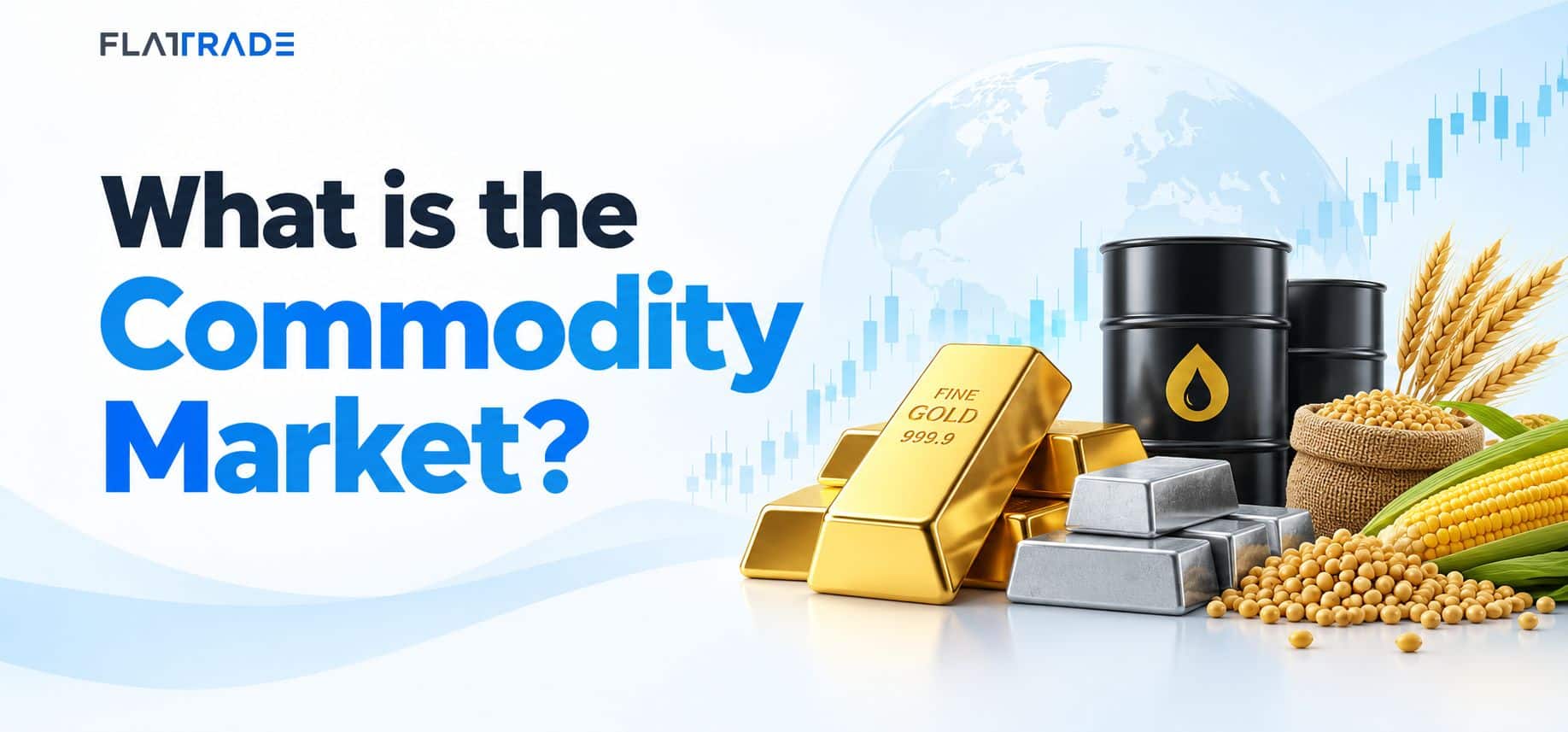
A commodity market is a marketplace where standardized commodities are traded. Unlike stocks — which represent fractional ownership in a corporation — commodities are tangible, physical goods bought and sold via standardized derivative contracts.
Traded commodities generally fall into four primary categories:
1. Precious Metals
- Gold
- Silver
Commonly treated as safe-haven assets during periods of macroeconomic uncertainty.
2. Base Metals
- Copper
- Aluminium
- Zinc
- Lead
Prices are directly tied to global manufacturing demand, infrastructure, and industrial cycles.
3. Energy Commodities
- Crude Oil
- Natural Gas
Heavily driven by global supply-demand dynamics, geopolitical shifts, and OPEC+ production mandates.
4. Agricultural Products
- Cotton
- Mentha Oil
- Spices & Pulses
- Farm produce
Influenced by monsoon seasons, crop yield reports, export curbs, and domestic demand.
Why Do Commodity Prices Change?
Commodity prices fluctuate on an ongoing basis due to an interplay of micro- and macroeconomic factors:
- Heightened economic uncertainty often increases demand for Gold as an inflationary hedge.
- Production volume adjustments by major oil-producing nations directly influence worldwide Crude Oil valuations.
- Unfavorable weather patterns or drought conditions can sharply limit crop outputs, driving up Agri-commodity prices.
What is Commodity Trading?
Commodity trading involves buying or selling derivative contracts linked to underlying physical commodities to capitalize on price shifts. Rather than handling physical delivery of barrels or metal ingots, market participants predominantly trade futures contracts listed on regulated exchanges.
Every futures contract features strictly predefined specifications:
- Quantity: The specific lot size per contract.
- Quality / Grade: Established minimum industry purity standards.
- Expiry Date: The scheduled date on which the contract terminates.
- Settlement Process: Cash-settled or physically deliverable terms.
This standardized architecture fosters deep market liquidity and ensures reliable price discovery.
What is MCX?
The Multi Commodity Exchange of India Ltd. (MCX) is the country’s flagship commodity derivatives exchange. Operating under regulatory oversight, MCX delivers an electronic platform tailored for the transparent execution of commodity futures and options.
Key Features of MCX
Broad Product Range
Trade metals, bullion, and energy contracts seamlessly through a single unified interface.
Electronic Execution
High-speed, automated order routing ensuring high transparency and minimal execution slippage.
Efficient Price Discovery
Real-time market depth and pricing reflecting ongoing domestic and international order flows.
Risk Management System
Comprehensive margins, price bands, and regulatory frameworks supporting continuous market integrity.
MCX Trading Hours
A notable advantage of commodity trading on MCX is its extended operating window. While equity cash markets close in the mid-afternoon, MCX trading continues late into the evening (subject to commodity specifications and seasonal Daylight Saving Time shifts).
These elongated hours allow Indian traders to hedge positions and capitalize on high-volatility events emerging from European and U.S. trading sessions in real time.
Who Participates in the Commodity Market?
The commodity ecosystem is made up of diverse market participants:
- Traders & Speculators: Seek short- to medium-term returns driven by directional price momentum.
- Hedgers: Raw material producers, refiners, and corporations managing input cost volatility.
- Investors: Portfolio managers seeking non-correlated asset exposure against broader equity drawdowns.
- Industrial Manufacturers: Commercial enterprises locking in raw material prices to stabilize balance sheets.
- Importers & Exporters: Entities hedging cross-border commodity price swings and currency risks.
Commodity Market vs Stock Market
While both markets trade on electronic exchanges, their structural dynamics differ significantly:
| Feature | Commodity Market | Stock Market |
|---|---|---|
| Asset Traded | Standardized physical commodities | Corporate equity shares |
| Ownership | No company ownership stake | Proportional equity ownership in a listed firm |
| Primary Drivers | Global demand/supply, weather, geopolitical conflict | Quarterly earnings, management execution, economic growth |
| Representative Assets | Crude Oil, Gold, Silver, Copper, Natural Gas | Blue-chip, mid-cap, and small-cap stocks |
| Primary Instruments | Commodity Futures & Options | Cash Equities, Stock Futures & Options |
Benefits and Risks of Commodity Trading
Core Benefits
- Portfolio Diversification: Commodities frequently exhibit low or negative correlation to conventional equities.
- Global Exposure: Macro market movements across London, New York, and Asia translate directly to MCX prices.
- Extended Market Flexibility: Active evening trading sessions adapt well around standard working hours.
- Transparent Centralized Pricing: Regulated exchange trading removes intermediary counterparty risk.
Key Risks to Manage
- Intense Volatility: Sudden geopolitical developments can trigger rapid, multi-percent intraday price swings.
- Leverage & Margin Calls: Futures leverage magnifies both profitability and capital drawdowns.
- Contract Expiry Mechanics: Open positions require active tracking, rollover management, or closure before delivery cycles.
Why Do Traders Track International Events?
Because commodities are traded globally, MCX prices are sensitive to overseas macro events. Key indicators to track include:
- Central bank rate changes and monetary policy statements (e.g., U.S. Federal Reserve, RBI).
- Consumer Price Index (CPI) and global inflation metrics.
- OPEC and OPEC+ ministerial meetings regarding daily crude oil production quotas.
- U.S. Dollar Index (DXY) strength, which is typically inversely correlated with metal prices.
- International inventory data releases, such as EIA Crude Oil and Natural Gas storage reports.
Trade Commodities on Flattrade
Access the Multi Commodity Exchange (MCX) seamlessly with high-speed execution, advanced trading tools, and transparent zero brokerage on commodity trades.
Open Free AccountFrequently Asked Questions (FAQs)
1. What is the commodity market?
The commodity market is a regulated marketplace where standardized contracts for physical raw materials — such as metals, energy products, and agricultural crops — are traded.
2. What is MCX?
MCX (Multi Commodity Exchange of India Ltd.) is India’s leading commodity derivatives exchange, providing an electronic trading infrastructure for commodity futures and options.
3. Can beginners trade commodities on MCX?
Yes, beginners can trade after learning how futures contracts, leverage, margins, and risk mitigation tools (such as stop-loss orders) work.
4. Which commodities are most active on MCX?
The highest liquidity is typically concentrated in Gold, Silver, Crude Oil, Natural Gas, Copper, and Zinc.
5. How is commodity trading different from stock trading?
Stock trading grants ownership in a corporate enterprise, whereas commodity trading involves standardized contracts derived from the price of underlying physical raw materials.