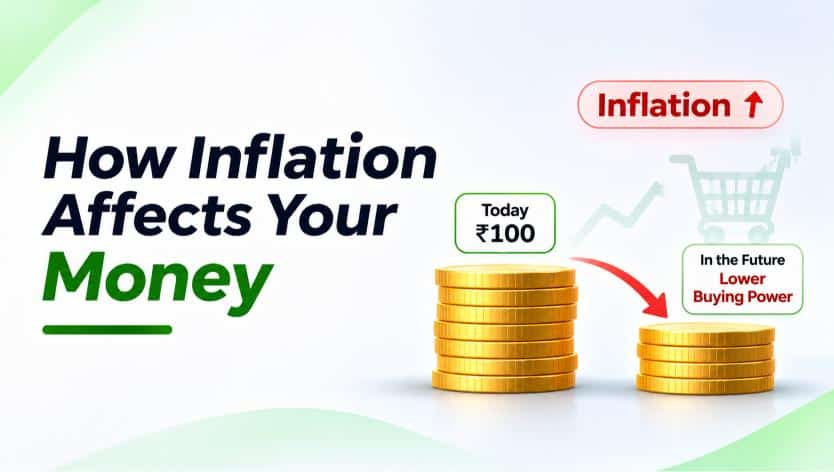
Inflation is the gradual increase in the prices of goods and services over time. As prices rise, the purchasing power of your money decreases, meaning the same amount of money buys fewer goods and services than before. Understanding inflation is essential for making informed financial and investment decisions.
What is Inflation?
Inflation measures the rate at which the prices of everyday items such as food, fuel, housing, healthcare, and transportation increase over time. In India, inflation is commonly measured using the Consumer Price Index (CPI).
For example:
- Today, a product costs ₹100.
- If inflation is 6%, the same product may cost ₹106 next year.
Your money has not decreased in value, but its purchasing power has.
How Inflation Impacts Your Money
1. Reduced Purchasing Power
As prices increase, your savings buy less than they did previously. If your income or investment returns don’t keep pace with inflation, your real wealth declines.
2. Lower Real Returns
Suppose your investment earns 8% annually while inflation is 6%.
Your approximate real return is only 2%, because a large portion of your earnings is offset by rising prices.
3. Higher Cost of Living
Inflation increases the cost of essentials such as groceries, fuel, rent, education, and healthcare, making household budgeting more challenging.
How to Protect Yourself from Inflation
Invest for Long-Term Growth
Historically, investments such as equities have offered the potential to generate returns that may outpace inflation over the long term. However, returns are never guaranteed.
Diversify Your Portfolio
A diversified portfolio across different asset classes can help reduce risk and improve long-term investment outcomes.
Invest Regularly
Systematic investing allows you to build wealth gradually and benefit from the power of compounding over time.
Review Your Financial Plan
Regularly review your investments and financial goals to ensure your portfolio remains aligned with changing economic conditions.
Inflation and Investing
Inflation can influence:
- Stock market performance
- Interest rates
- Corporate profits
- Bond prices
- Consumer spending
Investors should consider inflation when evaluating long-term investment returns rather than focusing only on nominal gains.
Final Thoughts
Inflation is a natural part of every economy, but it can gradually reduce the value of your money if your savings don’t grow fast enough. By understanding how inflation works, investing wisely, and maintaining a long-term perspective, you can better protect your purchasing power and build wealth over time.