

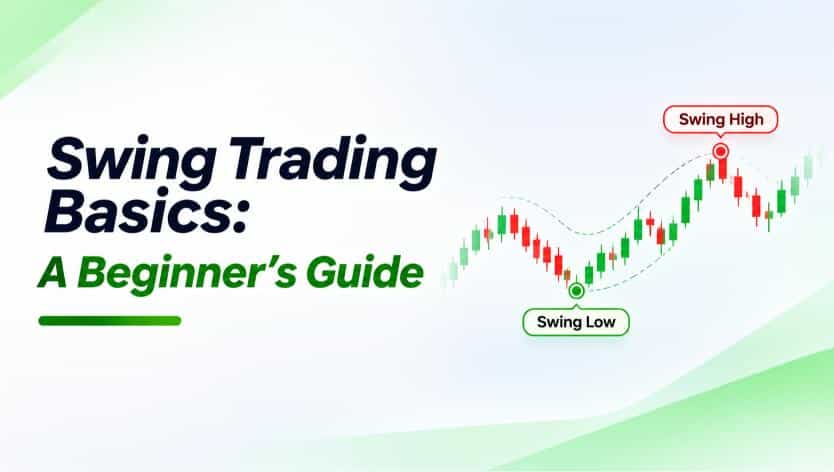
Swing trading is a trading style where traders aim to profit from short- to medium-term price movements in stocks or other financial instruments. Unlike intraday trading, swing traders hold their positions for a few days to several weeks, depending on market conditions and their trading strategy.
What is Swing Trading?
Swing trading focuses on capturing price “swings” within an existing market trend. Traders use technical analysis, chart patterns, and market trends to identify buying and selling opportunities.
For example, if a stock is expected to move from ₹500 to ₹550 over the next two weeks, a swing trader may buy the stock and sell it once the target is reached.
How Swing Trading Works
A typical swing trading process includes:
- Identify stocks showing strong trends or breakout patterns.
- Analyze charts using technical indicators.
- Decide the entry price.
- Set a stop-loss to limit potential losses.
- Set a profit target.
- Monitor the trade until the target or stop-loss is triggered.
Common Tools Used by Swing Traders
Swing traders often use:
- Moving Averages (20 EMA, 50 EMA)
- Relative Strength Index (RSI)
- MACD (Moving Average Convergence Divergence)
- Volume Analysis
- Support and Resistance Levels
- Trendlines and Chart Patterns
These tools help identify potential entry and exit points.
Advantages of Swing Trading
- Requires less screen time than intraday trading.
- Allows traders to benefit from short-term market trends.
- Can be suitable for people with full-time jobs.
- Offers more time to analyze trades before making decisions.
Risks of Swing Trading
- Overnight and weekend market risk.
- Sudden news or economic events can affect stock prices.
- No strategy guarantees profits.
- Poor risk management can lead to significant losses.
Risk Management Tips
- Always use a stop-loss.
- Risk only a small percentage of your trading capital on each trade.
- Maintain a favorable risk-reward ratio, such as 1:2 or higher.
- Avoid emotional or revenge trading.
- Follow your trading plan consistently.
Is Swing Trading Right for Beginners?
Swing trading can be a good option for beginners who want more time to analyze the market compared to intraday trading. However, success requires patience, discipline, proper risk management, and continuous learning.
Final Thoughts
Swing trading aims to capture medium-term price movements rather than daily fluctuations. By combining technical analysis, disciplined risk management, and a well-defined trading plan, traders can improve their decision-making. Remember that every trade carries risk, so never invest more than you can afford to lose and always continue learning before increasing your trading capital.