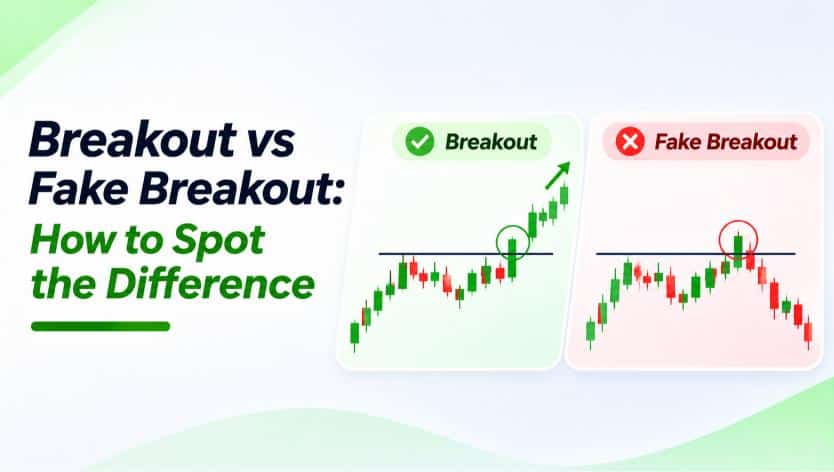

A breakout occurs when a stock’s price moves above a resistance level or below a support level with strong momentum. Traders often view breakouts as the beginning of a new trend. However, not every breakout is genuine. Sometimes the price briefly crosses a key level and then quickly reverses – this is known as a fake breakout or false breakout.
Understanding the difference can help traders avoid unnecessary losses and improve their trading decisions.
What is a Breakout?
A breakout happens when the price moves beyond an important support or resistance level with increased buying or selling interest.
For example:
- A stock trades between ₹480 and ₹500 for several weeks.
- It breaks above ₹500 with strong volume.
- The price continues rising to ₹520 or higher.
This is considered a successful breakout.
What is a Fake Breakout?
A fake breakout occurs when the price crosses a support or resistance level but fails to continue in that direction. Instead, it quickly moves back into its previous trading range, trapping traders who entered too early.
Example:
- A stock breaks above ₹500.
- Many traders buy expecting further gains.
- The price falls back below ₹500 the same day or shortly after.
This is a false breakout.
How to Identify a Genuine Breakout
Look for these signs:
- Strong trading volume during the breakout.
- A decisive close above resistance or below support.
- Follow-through price movement in the breakout direction.
- Confirmation from technical indicators such as Moving Averages, RSI, or MACD.
Warning Signs of a Fake Breakout
- Low trading volume.
- Price quickly reverses after crossing the breakout level.
- Long upper or lower candlesticks showing rejection.
- No follow-through in the breakout direction.
- Breakout occurs during weak or uncertain market conditions.
Tips to Avoid Fake Breakouts
Wait for Confirmation
Instead of entering immediately, wait for the candle to close above resistance or below support.
Watch Volume
Higher-than-average trading volume often provides stronger confirmation of a genuine breakout.
Use a Stop-Loss
Always define your risk before entering a trade. A stop-loss can help limit losses if the breakout fails.
Combine Multiple Indicators
Don’t rely only on price. Use trend analysis, support and resistance, volume, and momentum indicators together for better decision-making.
Common Mistakes
- Buying immediately after every breakout.
- Ignoring trading volume.
- Entering trades without confirmation.
- Trading based on emotions or fear of missing out (FOMO).
- Not using proper risk management.
Final Thoughts
Breakouts can present attractive trading opportunities, but not every breakout leads to a new trend. Waiting for confirmation, analyzing trading volume, and following a disciplined risk management strategy can help you distinguish between a genuine breakout and a fake breakout. Remember, protecting your capital is just as important as identifying profitable trades.