


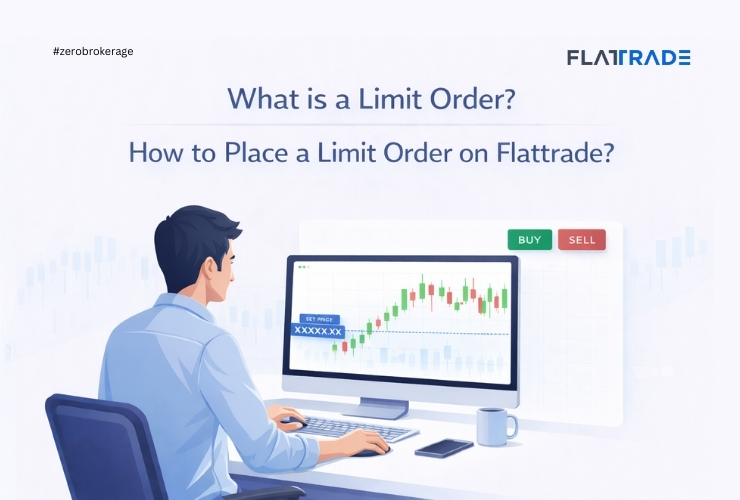
In the stock market, price matters.
Whether you’re a trader seeking precise entries or an investor building positions gradually, understanding a Limit Order is essential.
What is a Limit Order?
A Limit Order is an order to buy or sell a stock, option, or other security at a specific price or better.
Buy Limit Order → Executes at your specified price or lower
Sell Limit Order → Executes at your specified price or higher
It gives you control over the maximum price you pay (for buying) or the minimum price you accept (for selling).
However, execution is not guaranteed. If the market never reaches your limit price, the order will remain pending or expire based on validity.
How Does a Limit Order Work?
Assume:
- Stock LTP: ₹500
- Bid: ₹499
- Ask: ₹501
Example 1: Buy Limit Order
You place a buy limit at ₹495.
Your order will execute only if sellers are willing to sell at ₹495.
Example 2: Sell Limit Order
You hold shares and place a sell limit at ₹520.
Your order will execute only if buyers are willing to pay ₹520.
If the price never reaches your limit, the order stays pending.
Why Use a Limit Order?
Limit orders offer several advantages:
Price control – Avoid paying more or selling for less than intended
Reduced slippage – Protection against sudden price moves
Strategic alignment – Useful near support, resistance, or valuation levels
Disciplined execution – Suitable for both traders and long-term investors
For example, if a stock is trading at ₹500 but you believe the fair value is ₹480, you can place a buy limit at ₹480 and wait patiently.
How to Place a Limit Order on Flattrade?
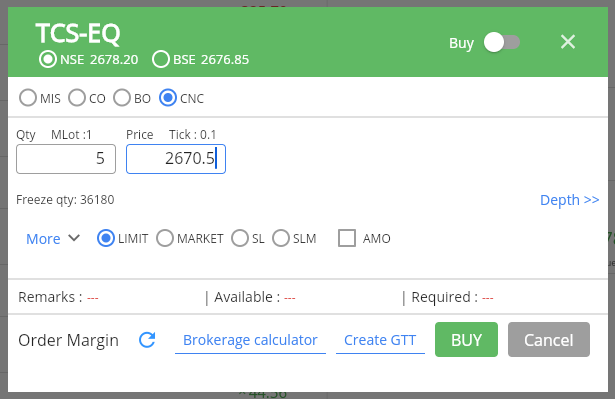
Step 1: Log in to the Flattrade web platform or mobile app
Step 2: Search for your desired stock
Step 3: Click Buy or Sell
Step 4: Select Order Type → Choose “Limit”
Step 5: Enter your desired Limit Price
Step 6: Enter Quantity
Step 7: Choose Product Type (CNC, MIS, CO, or BO)
Step 8: Review details and place the order
When Should You Use Limit Orders?
- Buying near support levels
- Selling near resistance levels
- Trading in volatile markets
- Placing large quantity orders
- Investing in mid-cap or small-cap stocks
A Limit Order allows you to decide the price, not the market.
Instead of accepting the current market price, you choose the level you’re comfortable with.
However, remember:
If the market does not reach your price, the order will not execute.
Limit Orders are best when you have:
- A clear price target
- A structured plan
- Patience
Because in disciplined investing, price matters.
Trade with Precision on Flattrade
Flattrade provides a clean and efficient order placement interface that allows you to execute Limit Orders with clarity and speed. With real-time market data, advanced charting tools, and transparent zero brokerage across segments, traders and investors can place structured orders without unnecessary complexity.
Whether you’re entering near support, exiting at resistance, or accumulating systematically, Flattrade enables disciplined execution.