



From Following the Crowd to Finding Your Own Entry
Karthik had just finished lunch when his phone buzzed.
A message popped up in the office group chat.
“XYZ stock is flying. Everyone’s buying.”
He opened his trading app immediately.
The stock was already up 6%.
Social media was full of excitement.
“This is just the beginning.”
“Easy money.”
“Don’t miss out.”
Karthik felt that familiar rush.
What if it keeps going?
What if I miss this move?
He hadn’t studied the company.
He hadn’t checked the chart.
He didn’t know why it was rising.
But everyone sounded confident.
So he bought.
Fast. Emotional. Without a plan.
For the next few minutes, it felt like the right decision.
The price moved up a little more.
He smiled.
Then it began to slip.
Slowly at first.
Then faster.
By market close, most of the gains had vanished.
Karthik was left holding a losing trade.
The group chat that had been so active earlier was now silent.
That evening, he sat back and replayed everything in his mind.
The truth became clear.
He hadn’t entered because of research.
He hadn’t entered because of conviction.
He had entered because of fear.
Fear of missing out.
FOMO had placed the trade.
Not him.
That realisation stayed with him.
Over the next few days, he began reading more about how these sudden moves happen.
Sometimes prices rise on excitement, not fundamentals.
Sometimes by the time a stock becomes “hot news,” early buyers are already preparing to exit.
And often, those who enter late become liquidity for those leaving early.
It was an uncomfortable lesson.
But an important one.
The next time a stock tip landed in the group chat, Karthik didn’t rush.
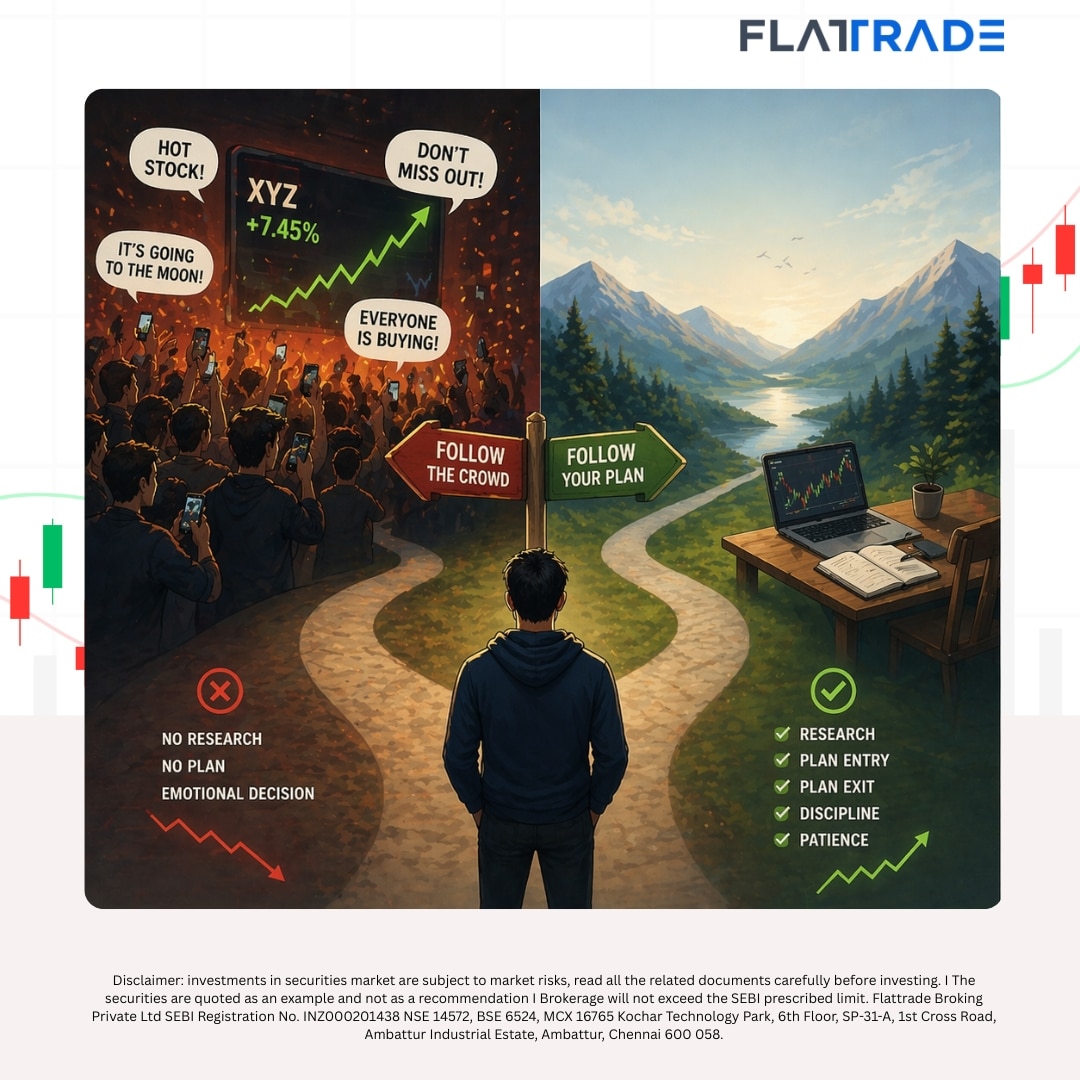
He paused and asked himself three questions:
Have I understood this company or setup?
Do I know my entry and exit?
Am I buying because I believe in it, or because others are buying it?
If he couldn’t answer clearly, he stayed out.
Yes, he missed some moves.
But he also avoided many bad ones.
And he slowly realised something valuable.
Missing a trade hurts for a moment.
A bad trade can hurt much longer.
The market doesn’t know who bought late.
It doesn’t reward excitement.
It doesn’t punish patience.
It simply moves.
From that point on, Karthik stopped trying to catch every rally.
He focused on catching only the right ones.
Because sometimes, the smartest trade… is the one you don’t take.