

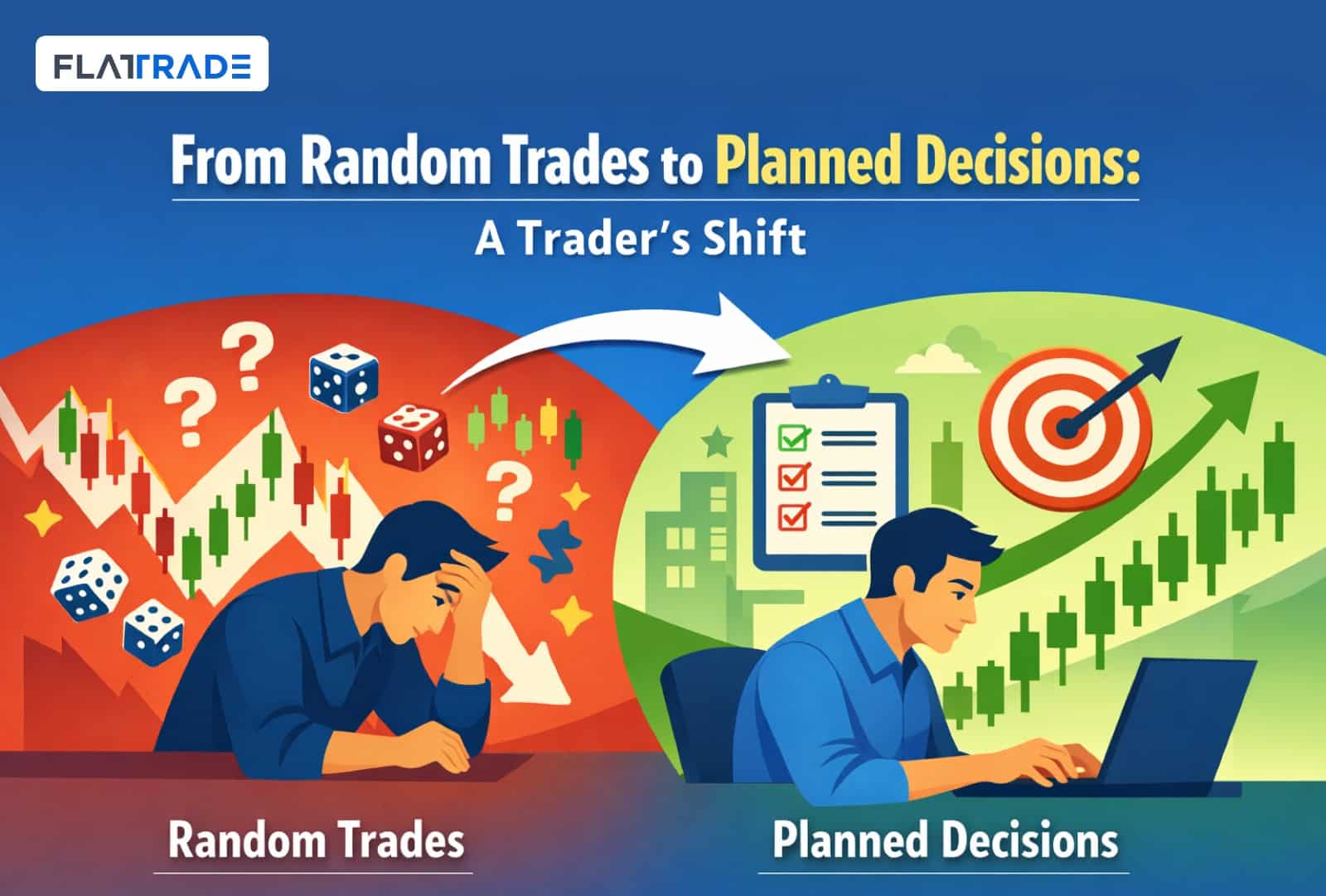
From Random Trades to Planned Decisions: A Trader’s Shift
Salman had always been curious about the markets.
“Let me just try this out,” he thought, placing his first trade.
It was small. Simple.
At first, trading was casual.
Checking prices in between work, following a few stocks, placing the occasional trade.
But slowly, curiosity turned into habit.
“Maybe I should buy this.”
“It’s falling… should I exit?”
That’s how most of his decisions looked.
Sometimes it worked.
Sometimes it didn’t.
After a while, he paused.
“Why does this feel random?”
Looking back, the answer was clear.
There was no plan.
No clear entry.
No defined exit.
And almost no thought about risk.
Instead of continuing the same way, Salman took a step back.
He started learning, not just what to trade, but how to approach it.
One idea stood out:
Plan the trade before placing it.
It sounded simple. But it changed everything.
The next time he opened his trading app, he slowed down.
“Why am I entering this trade?”
“At what price does it make sense?”
“What’s the risk if I’m wrong?”
For the first time, he had answers.
He defined his entry.
Set his stop-loss.
And then placed the trade.
The outcome didn’t matter as much.
What felt different was the process.
More clarity.
More control.
Less noise.
Even small things began to change.
He stopped rushing into trades.
Started using limit orders.
And began focusing on risk before returns.
Over time, the shift was clear.
He wasn’t reacting anymore.
He was deciding.
“Maybe I don’t need to be in every trade,” he realised.
And that itself felt like progress.
Looking back, nothing about the market had changed.
Only his approach had.
What started as random trades slowly turned into planned decisions.
Not perfect. Not always right.
But far more structured.
With the right tools and access to learning, that shift becomes easier to make.