
How Do Professional Traders Manage Risk?
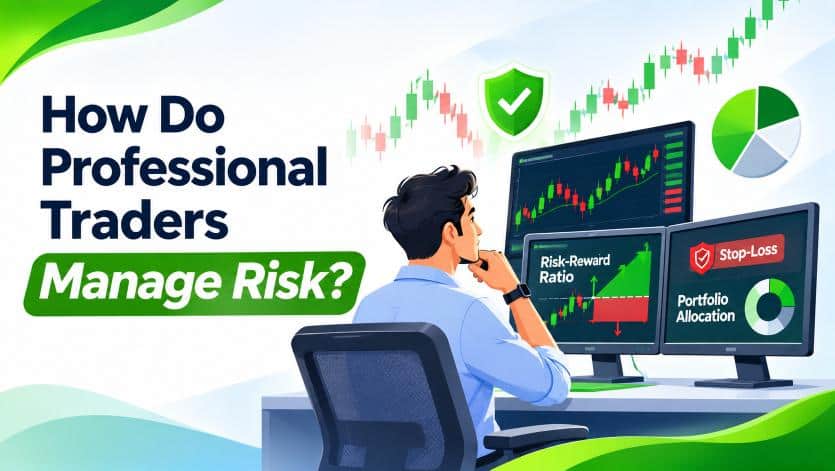
Professional traders know that losses are part of trading. Instead of trying to avoid losses entirely, they focus on limiting losses and protecting their capital. Effective risk management helps them stay in the market long enough to benefit from profitable opportunities.
1. Risk Only a Small Percentage Per Trade
Many professional traders risk only 1 – 2% of their total trading capital on a single trade. This ensures that a few losing trades won’t significantly impact their portfolio.
2. Use Stop-Loss Orders
A stop-loss order automatically exits a trade if the price moves against the trader. Professionals place stop-losses at logical technical levels rather than arbitrary prices, helping them control potential losses.
3. Calculate Position Size
Instead of deciding how many shares to buy first, professionals determine how much they are willing to lose and then calculate the appropriate position size.
Position Size = (Trading Capital × Risk %) ÷ (Entry Price − Stop-Loss Price)
4. Maintain a Healthy Risk-to-Reward Ratio
Many traders look for trades where the potential reward is at least twice the potential risk (such as a 1:2 risk-to-reward ratio). This means they don’t need to win every trade to be profitable over time.
5. Set Daily Loss Limits
Professional traders often define a maximum daily loss. Once that limit is reached, they stop trading for the day to avoid emotional decision-making and revenge trading.
6. Avoid Over-Leveraging
Using excessive leverage can amplify both profits and losses. Experienced traders use leverage carefully and only when it fits their risk management plan.
7. Diversify and Avoid Correlated Trades
Rather than putting all their capital into one stock or multiple highly correlated positions, professionals spread risk across different sectors or instruments whenever appropriate.
8. Control Emotions
Fear and greed can lead to poor decisions. Professional traders follow a predefined trading plan instead of reacting emotionally to market movements. They avoid increasing position sizes after losses or chasing trades.
Final Thoughts
The biggest difference between amateur and professional traders isn’t finding the perfect trade – it’s managing risk consistently. By using stop-losses, proper position sizing, disciplined risk limits, and emotional control, professional traders aim to protect their capital and improve their chances of long-term success.