

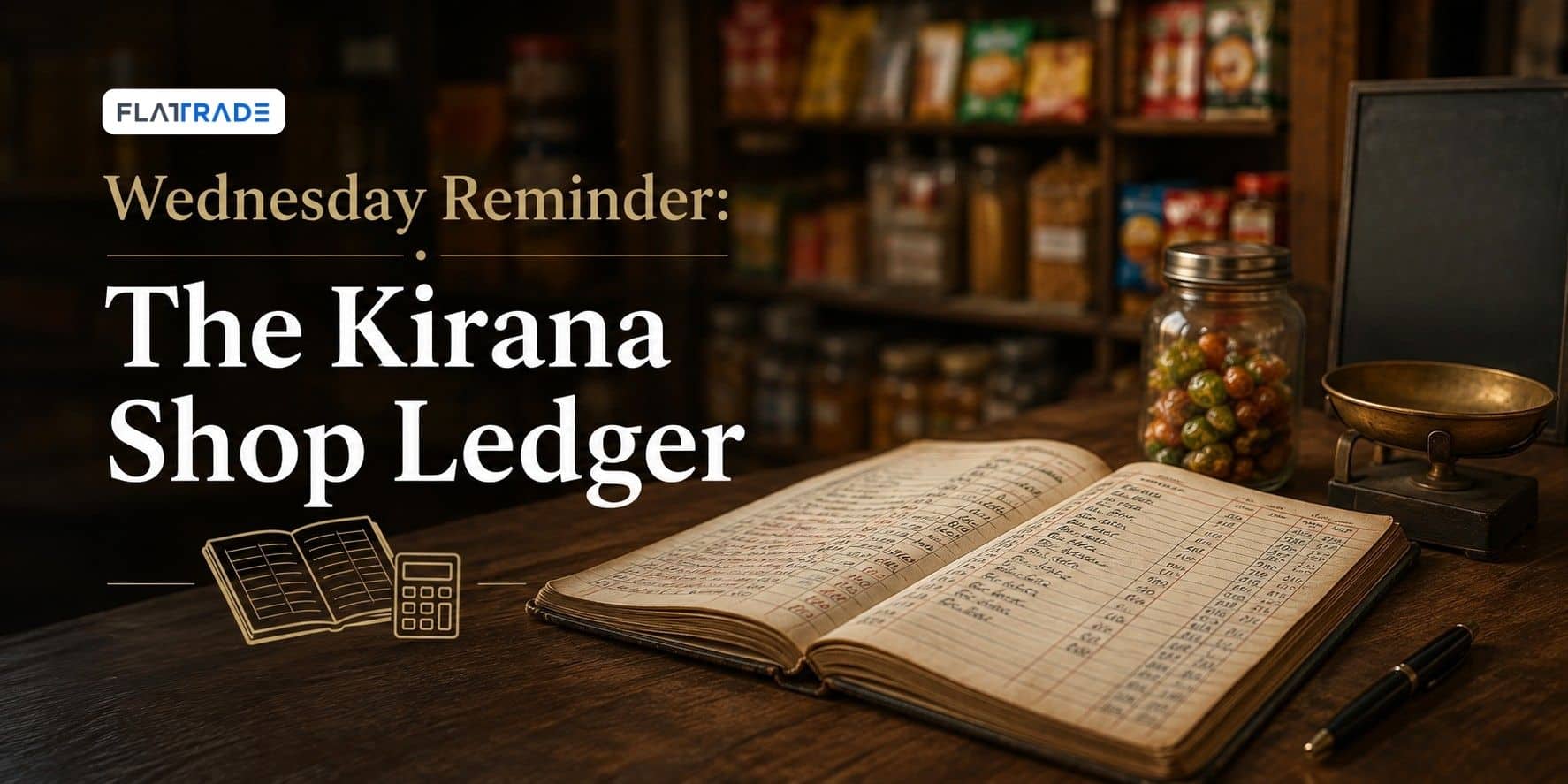
Every evening at 9 p.m., after the last customer left, Ramesh uncle would pull out a thick, worn-out notebook.
It wasn’t a diary.
It wasn’t a bill book.
It was his ledger.
For over 25 years, every purchase, every sale, every payment received and every amount due had found its way into those pages.
One evening, his nephew Arjun noticed him going through it.
“Uncle, why do you still look at this every day? Everything is digital now.”
Ramesh uncle smiled.
“Because this tells me how my business is actually doing.”
He turned a few pages.
“This tells me what sells.”
Another page.
“This tells me what isn’t moving.”
Then another.
“And this tells me where my money is going.”
Arjun nodded.
Ramesh uncle looked at him.
“You’ve started investing, haven’t you?”
“Yes.”
“So when you buy a share, what do you look at?”
Arjun thought for a moment.
“Usually the price. Some news. Videos. What people are talking about.”
Ramesh uncle smiled again.
“If another shopkeeper tells me biscuits are selling very well, should I immediately order fifty cartons?”
Arjun laughed. “Obviously not.”
“Why?”
“You’d check whether they sell in your shop first.”
“Exactly.”
He tapped the ledger.
“I look at the numbers before I make a decision.”
Then he added:
“A company has a ledger too.”
Arjun looked curious.
“Revenue. Profit. Expenses. Debt. Cash flow. All those numbers tell you something about the business.”
“The share price tells you what people are willing to pay for it today.”
“The financial statements help you understand what’s happening inside the business.”
Ramesh uncle closed the ledger.
“Noise can get your attention.”
“But numbers give you something to study.”